
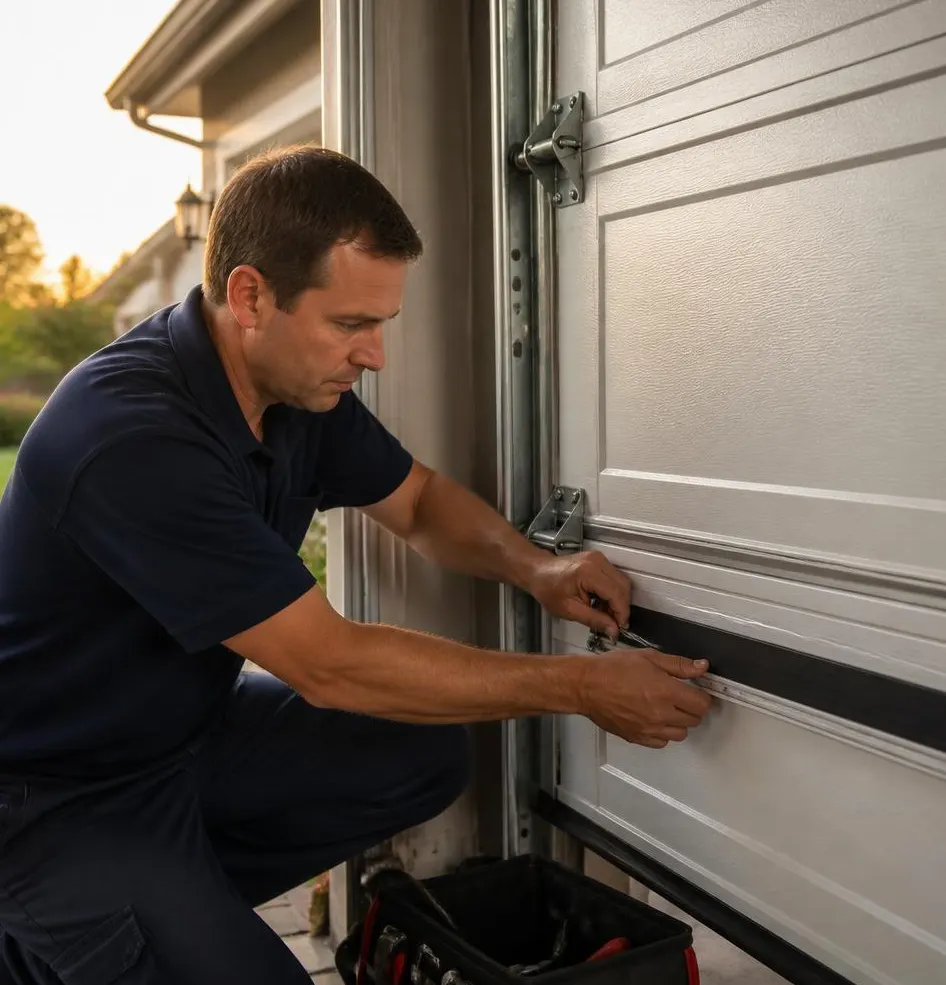
You hear it before you see it: that dry, grinding squeal every time the door rolls up on a Saturday morning. Maybe it's been building for weeks, getting louder as the summer dust settled into every moving part. By the time you're standing in the driveway wincing at the noise, your garage door is telling you it needs attention — and in most cases, that attention is simple lubrication, not a repair call.
After a long dry season of Santa Ana winds and wildfire smoke drifting through the Inland Empire, garage door hardware in Corona tends to collect a fine grit that works its way into hinges, rollers, and tracks. That grit mixes with old lubricant and turns into a gummy paste that grinds metal against metal every time the door moves. Before winter rain arrives and humidity swings the other direction, a proper lubrication job will save your hardware and quiet the door down fast.
Tools You'll Need
- A silicone-based garage door lubricant or white lithium grease (in spray or tube form)
- Clean, lint-free rags
- A soft-bristle brush or old toothbrush
- A step ladder
- Safety glasses
- A shop vacuum or stiff brush for clearing debris from tracks
Step-by-Step: How to Lubricate Your Garage Door
- Disconnect the opener and test by hand. Pull the release cord so the door is in manual mode, then lift it partway and let go. It should hold its position. If it drops or shoots upward, that's a spring tension issue — stop here and don't lubricate yet; call a technician instead.
- Clean before you lubricate. Wipe down the tracks, hinges, and rollers with a dry rag to remove built-up dust and old grease residue. This step matters more in Corona than in milder climates, since dry-season dust cakes onto hardware and turns fresh lubricant into sludge if it's applied over dirt.
- Lubricate the hinges. Apply a light coat of silicone or lithium grease to each hinge pivot point, where the door panels meet. Work the door up and down a few inches to let the lubricant settle into the joint.
- Lubricate the rollers. Spray lubricant directly onto the roller bearings, not the track itself. If your rollers are nylon, a small amount goes a long way. Avoid soaking the roller wheel's rolling surface — you want the bearing lubricated, not the wheel slick.
- Lightly coat the springs. Run a thin layer of lubricant along the length of the torsion or extension springs. This reduces metal fatigue and friction noise, but don't touch the mounting cones or attempt to adjust tension.
- Lubricate the opener's drive mechanism. If you have a chain-drive opener, apply a small amount of lubricant along the chain. Belt-drive openers don't need lubrication on the belt itself — only the moving metal parts at either end of the rail.
- Wipe off excess. Extra lubricant attracts more dust, which defeats the purpose. Go back over every point you treated and wipe away anything that didn't absorb.
- Reconnect the opener and cycle the door a few times. Listen for remaining noise. A properly lubricated door should move smoothly and quietly from top to bottom.
What to Use — and What to Avoid
Silicone-based sprays and white lithium grease are the two safe choices for garage door hardware. Both resist washing out in winter rain and hold up to temperature swings between hot inland days and cooler nights.
Avoid WD-40 as a long-term lubricant. It's a solvent and light degreaser, not a lubricant — it will temporarily quiet a noisy part, then evaporate and leave the metal drier than before, which actually attracts more dust. Also avoid heavy automotive grease or petroleum-based products on rollers; they gum up quickly in dusty conditions and are harder to clean off later.
Never lubricate the tracks themselves. Tracks should be kept clean and dry — lubricant on the track surface causes rollers to slip rather than roll, which accelerates wear.
What a Homeowner Can Safely Do vs. What Needs a Technician
Lubricating hinges, rollers, and chains is a reasonable DIY task for most homeowners with basic tools and a step ladder. What's not safe to handle yourself:
- Adjusting or replacing torsion or extension springs — these hold enormous tension and can cause serious injury if mishandled
- Realigning bent tracks
- Replacing worn rollers, cables, or bottom brackets
- Diagnosing a door that won't hold position even after lubrication
If you've gone through every step above and the door still grinds, sags, or struggles to open, the issue is likely mechanical wear rather than friction — and that's a job for a trained eye.
When to Call Corona Garage Door
If lubrication quiets things down for a week or two and then the noise comes back, or if you notice uneven movement, a door that feels heavier than usual, or visible gaps in the spring coils, it's time to schedule a visit. Corona Garage Door offers Maintenance & Tune-Ups that go beyond a basic oiling — technicians inspect spring tension, hardware wear, and track alignment, all of which take a beating from Corona's dry summers and shifting fall weather. If a spring has stretched or cracked, our Spring Replacement service handles it safely with the right tools and tension equipment, something no homeowner should attempt solo.
Getting your garage door serviced now, before winter rain sets in, keeps it running smoothly through the wet months ahead. Call Corona Garage Door today to schedule a tune-up anywhere in Corona, CA and the surrounding Inland Empire.